• 31 posts
  • 0 comments
Joined 3 years ago
Cake day: June 12th, 2023

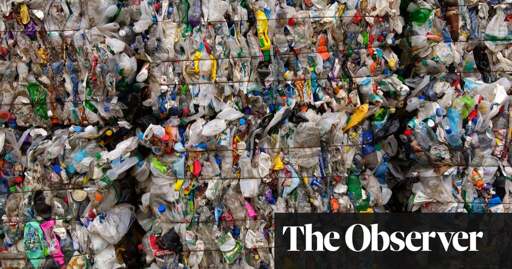
Lobbyists for Britain’s biggest food brands successfully pushed for a £1.7bn packaging tax to be deferred, new documents reveal.

The fees for a new scheme to improve recycling rates and tackle plastic pollution were due to be imposed this month, but were delayed for a year by the last Tory government after the industry complained about the costs in a series of private meetings.

The extended producer responsibility (EPR) scheme aims to shift the costs of collecting and recycling waste on to the companies that make packaging for soft drinks, confectionery and other consumer goods. They would pay fees based on the amount of packaging they use, with lower fees for more sustainable options.

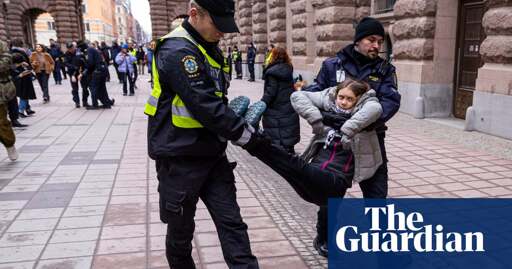
Wealthy, democratic countries in the global north are using harsh, vague and punitive measures to crack down on climate protests at the same time as criticising similar draconian tactics by authorities in the global south, according to a report.

A Climate Rights International report exposes the increasingly heavy-handed treatment of climate activists in Australia, Germany, France, the Netherlands, Sweden, the UK and the US.

It found the crackdown in these countries – including lengthy prison sentences, preventive detention and harassment – was a violation of governments’ legal responsibility to protect basic rights to freedom of expression, assembly, and association.

It also highlights how these same governments frequently criticise regimes in developing countries for not respecting the right to protest peacefully.

A judge in the Brazilian state of Rondonia has found two beef slaughterhouses guilty of buying cattle from a protected area of former rainforest in the Amazon and ordered them, along with three cattle ranchers, to pay a total of $764,000 for causing environmental damage, according to the decision issued Wednesday. Cattle raising drives Amazon deforestation. The companies Distriboi and Frigon and the ranchers may appeal.

It is the first decision in several dozen lawsuits seeking millions of dollars in environmental damages from the slaughterhouses for allegedly trading in cattle raised illegally in a protected area known as Jaci-Parana, which was rainforest but is now mostly converted to pasture.

Four slaughterhouses are among the many parties charged, including JBS SA, which bills itself as the world’s largest protein producer. The court has not decided on the cases involving JBS.

Lebanon charged its embattled former central bank governor Wednesday with the embezzlement of $42 million, three judicial officials told The Associated Press.

Riad Salameh, 73, was charged by the Financial Public Prosecution a day after he was detained following an interrogation by Lebanon’s top public prosecutor over several alleged financial crimes.

His case has been transferred to an investigating judge, the officials added, who spoke on condition of anonymity in line with regulations.

Salameh ended his 30-year term as central bank governor a year ago under a cloud, with several European countries probing allegations of financial crimes. Many in Lebanon blame him for the crippling financial crisis that has gripped the country since late 2019.

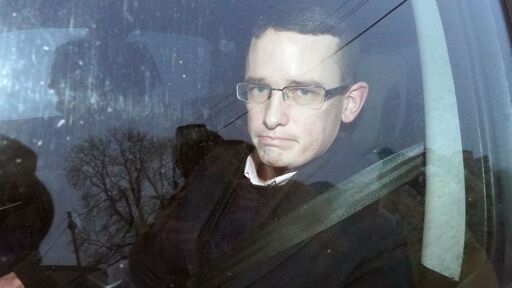
Enoch Burke was arrested by Irish police at Wilson’s Hospital School in County Westmeath today on Monday refusing to abide by a court order instructing him to stay away.

The school board had dismissed Burke from his post after a dispute over his refusal to recognise a transgender student’s new identity.

Burke was brought to the High Court in Dublin on Monday evening, where a judge ruled that he was in breach of the existing court order, and was to be returned to Mountjoy Prison.

Burke accused the court of denying him his religious rights, which included his belief in two genders, male and female. “This is a mockery of justice,” he told the judge.

Donald Trump is finally recognizing he’s at risk of losing the election unless he makes some changes.

As Democrats convened this week in Chicago, the former president’s campaign advisers reached out to people who are allies of both Trump and Brian Kemp, the popular governor of Georgia he was publicly attacking just weeks ago, to smooth things over between the two Republicans.

Trump’s advisers, meanwhile, have been privately strategizing about how to broaden his appeal with voters and shore up support among top allies. They convened a stakeholders call last week with a small group of influential Trump supporters and unofficial advisers to provide an update on the election.

Former President Donald Trump is attacking Vice President Kamala Harris’ plan for a federal ban on price gouging by grocery stores and food suppliers as “Soviet-style” controls.

But Republican state officials across the country have embraced the idea of capping excessive prices for years.

GOP state attorneys general, as well as many of their Democratic counterparts, have moved to stop companies from charging what they view as exorbitant increases in the cost of some goods in certain circumstances.

In Texas, Attorney General Ken Paxton, a Republican, sued a large egg supplier for raising prices by about 300 percent at the height of the pandemic lockdowns in 2020.

Former U.S. ambassador to the United Nations, Nikki Haley, on a visit to Taiwan Saturday said an isolationist policy isn’t “healthy” and called on the Republican Party to stand with her country’s allies, while still putting in good words for the party’s nominee, Donald Trump.

Haley, who ran against Trump for the Republican presidential nomination, told reporters in the capital, Taipei, that supporting U.S. allies, including Ukraine and Israel, is vital, and she underscored the importance of Taiwan — which Beijing claims as its territory, to be brought under control by force if necessary.

“I don’t think the isolationist approach is healthy. I think America can never sit in a bubble and think that we won’t be affected,” she said.

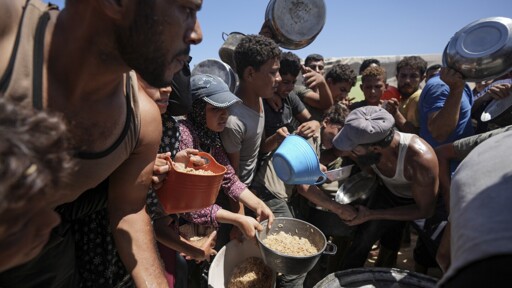
Young girls screamed and elbowed each other in a crush of bodies in southern Gaza, trying desperately to reach the front of the food line. Men doled out rice and chicken as fast as they could, platefuls of the nourishment falling to the ground in the tumult.

Nearby, boys waited to fill plastic containers with water, standing for hours among tents packed so tightly they nearly touched.

Hunger and desperation were palpable Friday in the tent camp along the Deir al-Balah beachfront, after a month of successive evacuation orders that have pressed thousands of Palestinians into the area that the Israeli military calls a “humanitarian zone.”

It might feel like the presidential election is still a long way off. It’s not.

There are just over 70 days until Election Day on Nov. 5, but major dates, events and political developments will make it fly by. Think about it this way: The stretch between now and then is about as long as summer break from school in most parts of the country.

In just two weeks, Sept. 6, the first mail ballots get sent to voters. The first presidential debate is set for Sept. 10. Former President Donald Trump, the Republican nominee, is scheduled to be sentenced in his New York hush money case on Sept. 18. And early in-person voting will start as soon as Sept. 20 in some states.

Oklahoma’s education board has revoked the license of a former teacher who drew national attention during surging book-ban efforts across the U.S. in 2022 when she covered part of her classroom bookshelf in red tape with the words “Books the state didn’t want you to read.”

The decision Thursday went against a judge who had advised the Oklahoma Board of Education not to revoke the license of Summer Boismier, who had also put in her high school classroom a QR code of the Brooklyn Public Library’s catalogue of banned books.

An attorney for Boismier, who now works at the Brooklyn Public Library in New York City, told reporters after the board meeting that they would seek to overturn the decision.

Conservative activists in Georgia have worked with prominent election deniers to pass a series of significant changes to the procedures for counting ballots in recent weeks, raising alarm about the potential for confusion and interference in the election certification process in a key swing state this fall.

Since the beginning of August, the five-member state election board has adopted rules that allow local election boards to conduct a “reasonable inquiry” into election results before they are certified, and to allow any local election board member “to examine all election related documentation created during the conduct of elections prior to certification of results”. The same rule also requires local boards to reconcile any discrepancies between the total number of ballots cast and the number of voters who check in. If it can’t reconcile the numbers, the board is authorized to come up with a way to figure out which votes count and which do not.

At its upcoming meeting in September, the board is also expected to approve a measure that would require local officials to hand-count ballots to check the machine tabulations. Experts have warned that hand-counts are unreliable, costly and time-consuming.

But at the same time, observers are concerned new changes are seeding the ground to give local county commissioners justifications to object to the certification of the vote.

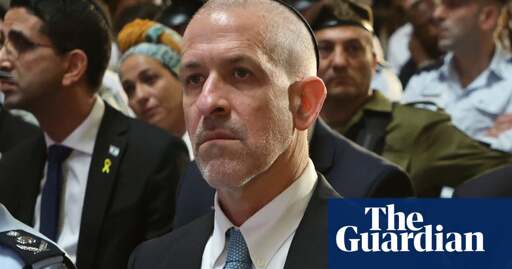
The head of Israel’s security agency, Shin Bet, has warned the country’s leaders that Jewish terrorism in the West Bank is out of control and has become a serious threat to national security.

Ronen Bar issued the warning in a letter to the prime minister, Benjamin Netanyahu, the attorney general and members of the Israeli cabinet, some of whom are outspoken backers of the extremist settlers responsible for the escalating violence.

Bar’s letter, sent last week but published by Israel’s Channel 12 News on Thursday night, has highlighted the wide, acrimonious gap between the far-right wing of Netanyahu’s coalition and Israel’s security apparatus.

The national security minister, Itamar Ben-Gvir, one of those criticised by Bar for inflammatory behaviour, called for the Shin Bet head to be fired, triggering a rebuke on Friday from the defence minister, Yoav Gallant.

After publicly posting only that Weatherford College’s board would meet to discuss property, members emerged from behind closed doors in November 2022 and voted unanimously to give a 38-acre property to Community Christian School. The property was valued at more than $2 million, according to the county’s appraisal district.

“Faith and patience is the path,” Dan Curlee, then the college’s attorney, wrote in an email after the vote to Doug Jefferson, the administrator of the private religious school.

About two years later, the property sits empty as Community Christian School raises the funds needed to make repairs that Jefferson estimates will cost $1.2 million. The donation also raises questions about government oversight at a time when state and local officials are increasingly blurring the lines between church and state, experts said.

Legal experts say the donation appears to have violated multiple state and federal laws, including a provision in the Texas Constitution that prohibits political subdivisions, including public junior colleges, from granting anything of value to aid an individual, association or corporation without return benefit. They also pointed to another provision in state law that prohibits public junior colleges from conveying, selling or exchanging their land for less than fair market value unless the land goes to an abutting property owner.

The principal’s action was the result of a new state law that had gone into effect just months earlier, heightening penalties for students who make threats at school. Passed after a former student shot and killed six people at The Covenant School in Nashville, the law requires students to be expelled for at least a year if they threaten mass violence on school property, making it a zero-tolerance offense.

Tennessee lawmakers claimed that ramping up punishments for threats would help prevent serious acts of violence. “What we’re really doing is sending a message that says ‘Hey, this is not a joke, this is not a joking matter, so don’t do this,’” state Sen. Jon Lundberg, a co-sponsor of the legislation, told a Chattanooga news station a week and a half after the law went into effect.

Tennessee school officials have used the law to expel students for mildly disruptive behavior, according to advocates and lawyers across the state who spoke with ProPublica. (In Tennessee and a number of other states, expulsions aren’t necessarily permanent.) Some students have been expelled even when officials themselves determined that the threat was not credible. Lawmakers did put a new fix in place in May that limits expulsions to students who make “valid” threats of mass violence. But that still leaves it up to administrators to determine which threats are valid.

In some cases last school year, administrators handed off the responsibility of dealing with minor incidents to law enforcement. As a result, the type of misbehavior that would normally result in a scolding or brief suspension has led to children being not just expelled but also arrested, charged and placed in juvenile detention, according to juvenile defense lawyers and a recent lawsuit.

The level of political donations from major food companies accepted by Democratic lawmakers has ticked higher this congressional election cycle, even as many Democrats have accused the top U.S. grocery chains and their suppliers of pushing prices higher at consumers’ expense, a Reuters analysis of Federal Election Commission data shows.

Democrats have reason to focus on food prices, which have risen 25% between 2019 and 2023. Reuters/Ipsos polling shows the economy is voters’ top concern and they have higher confidence in Republicans to manage it.

Dozens of Democrats have stepped up their calls since Kroger, the nation’s biggest grocer by revenue, proposed a $24.6 billion merger with smaller rival Albertsons. The Federal Trade Commission’s challenge to the deal, which it argues is bad for shoppers and workers, goes to trial in an Oregon federal court beginning Monday.

Albertsons’ PAC has so far contributed $291,500, more than triple its $90,000 through the full 2021-2022 election cycle. Kroger’s PAC is also running ahead of its pace, having donated $141,000 so far, up from $140,500 for the entirety of the 2021-2022 cycle.

NASA said Thursday it will decide this weekend whether Boeing’s new capsule is safe enough to return two astronauts from the International Space Station, where they’ve been waiting since June.

Administrator Bill Nelson and other top officials will meet Saturday. An announcement is expected from Houston once the meeting ends.

Astronauts Butch Wilmore and Suni Williams launched aboard Boeing’s Starliner on June 5. The test flight quickly encountered thruster failures and helium leaks so serious that NASA kept the capsule parked at the station as engineers debated what to do.

SpaceX could retrieve the astronauts, but that would keep them up there until next February. They were supposed to return after a week or so at the station.

Israeli airstrikes killed dozens of people including two families in both Gaza and Lebanon, while Hezbollah fired a volley of 55 rockets into northern Israel in response.

World leaders urged restraint and tried to frame the ceasefire negotiations as heading in a positive direction.

But in an interview with Sky News, the leader of Hamas in Lebanon told us no progress had been made so far at the talks and the two sides appear to be just as far apart as ever.

Hamas is not at the negotiations but messages and updates have been passed on to them on the sidelines.

Israel has published plans for one of its proposed new settlements in the occupied West Bank, finance minister Bezalel Smotrich said on Wednesday, upping the ante a day before planned new Gaza peace talks seen as vital to preventing a regional war.

The far-right minister said the move was a response to actions by the Palestinian West Bank leadership and countries which have recognised a Palestinian state.

“No anti-Israel or anti-Zionist decision will stop the development of the settlement. We will continue to fight against the dangerous idea of a Palestinian state. This is the mission of my life,” said Smotrich.

Most United Nations member states consider settlements built in the West Bank and other territory Israel captured in the 1967 Middle East war to be illegal under international law. Israel disputes this, citing the Jewish people’s historical and biblical ties to the land.

Israel announced in June it was going to legalise five outposts in the West Bank, establish three new settlements, and seize huge swathes of land where Palestinians seek to create an independent state, further inflaming Palestinian anger.

If Iran’s newly elected president, Masoud Pezeshkian, was hoping for a honeymoon period after his inauguration last week, he must be sadly disappointed. Less than 12 hours after Pezeshkian was sworn in, an explosion, reportedly caused by a remotely controlled bomb, shook an Islamic Revolutionary Guard Corps (IRGC) compound in central Tehran. The target: Ismail Haniyeh, Hamas’s political leader, an honoured guest at the inauguration, and one of the Middle East’s most wanted. The bomb under the bed killed Haniyeh instantly. Honeymoon over.

The Haniyeh assassination, attributed to Israel and not denied in Jerusalem, has scrambled all those hopes. Pezeshkian finds himself in the eye of an international storm that analysts warn could lead to all-out war, engulfing the Middle East.

Infuriated by an audacious attack that humiliated him, his country and its elite armed forces, Khamenei – Iran’s ultimate authority – is said to have ordered preparations for direct military retaliation against Israel. Avenging Haniyeh’s death was “our duty”, Khamenei said. Pezeshkian had no choice but to meekly go along. Now the world waits to see what Iran will do. So much for a fresh start.

Iran’s next step may be decisive in determining whether the Middle East plunges into chaos. Its pivotal position should come as no surprise. Its gradual emergence as the region’s pre-eminent power has accelerated in the wake of 7 October. Iran’s anti-Israeli, anti-American “axis of resistance”, embracing ­militant Islamist groups in Lebanon, Syria, Iraq and Yemen, and ever more openly backed by China and Russia, is now a big force challenging the established western-led order.